
ERP Solutions
ERP Solutions in Port Harcourt
Custom ERP Solutions for Businesses in Port Harcourt and Across Nigeria
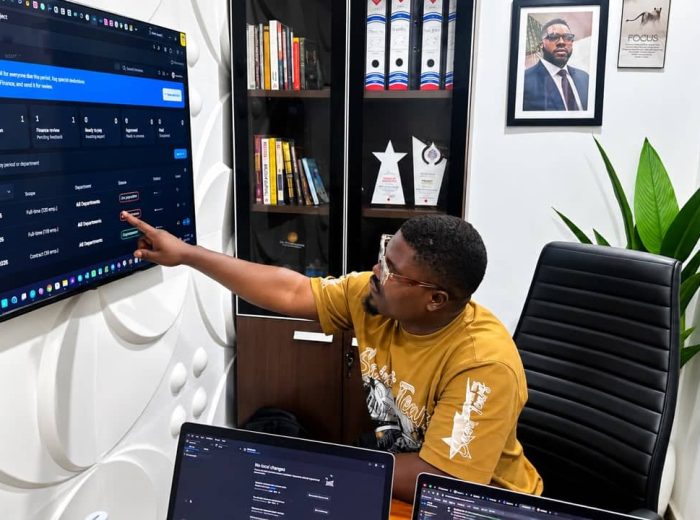
MEL-Technologies & Solution Limited builds ERP (Enterprise Resource Planning) solutions that bring your accounting, inventory, sales, HR and reporting into one secure system, designed around how your business actually works. From our base in Port Harcourt we work with businesses, institutions and organisations across Nigeria: we analyse your processes, build the right modules, train your team and keep the system running after launch.
- One source of truth for finance, stock, sales and people
- Cloud-based, so your team can work from the office, site or phone
- Automated approvals, alerts and reports that save hours every week
- Built to grow with you, with modules you can add later
What Is ERP?
One System for Your Whole Business
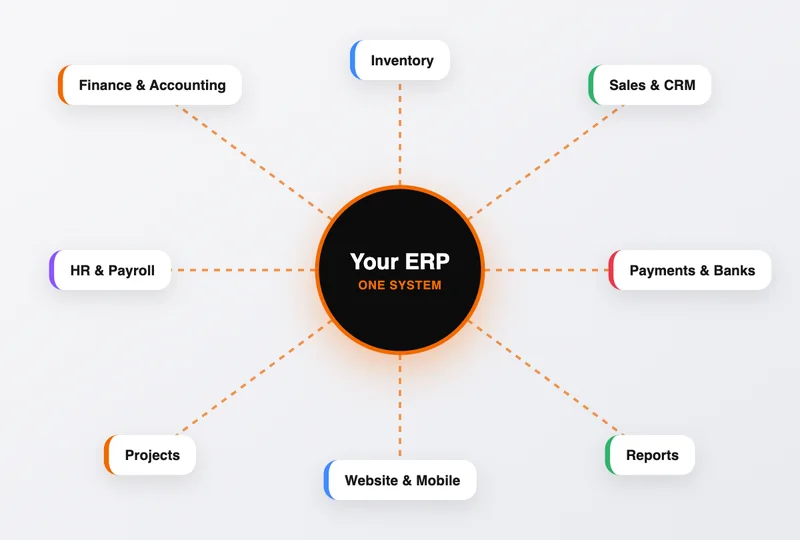
An ERP (Enterprise Resource Planning) system is a single platform that connects finance, inventory, sales, HR, projects and reporting, so every department works from the same up-to-date information. Instead of re-typing the same figures into spreadsheets, accounting software and WhatsApp messages, your team enters data once and the whole business sees it.
For Nigerian businesses this means fewer stock losses, faster invoicing and payment follow-up, payroll you can trust, approvals that do not wait on one person, and reports an owner can open from a phone. New to ERP? Read our guide to ERP software development in Nigeria.
What You Get
What Our ERP Solutions Cover
Every business is different, so we build and configure only the modules you need, and connect them so your data is entered once and used everywhere.
Finance & Accounting
Invoicing, payments, expenses, budgets and clear financial statements, so you always know where the money stands.
Inventory & Procurement
Track stock across locations, manage suppliers and purchase orders, and avoid both shortages and over-ordering.
Sales, CRM & Invoicing
Follow every lead and customer from first enquiry to paid invoice, with quotes, orders and history in one place.
HR & Payroll
Staff records, attendance, leave and payroll processing, with approvals handled in the system and not on paper.
Projects & Operations
Plan jobs, assign tasks, monitor progress and costs, and keep field and office teams working from the same information.
Reports & Dashboards
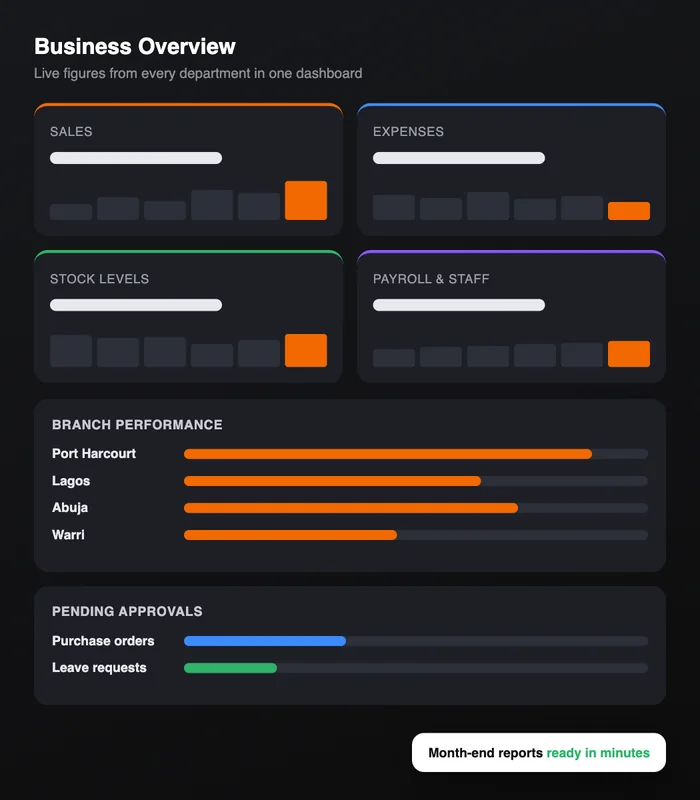
Live dashboards for owners and managers, so decisions rest on current figures and not month-end guesses.
Manufacturing & Production
Bills of materials, production orders, work in progress and costing, so you know what each product really costs to make.
Assets & Maintenance
Register equipment and vehicles, schedule servicing, track repairs and depreciation, and avoid unexpected breakdowns.
Approvals & Workflow Automation
Purchase requests, leave, expenses and payments move to the right people automatically, with alerts and a clear audit trail.
Is It Time?
Signs Your Business Needs an ERP System
Most businesses do not buy an ERP because they love software. They buy one because running without it has become too expensive. If several of these sound familiar, it is probably time to move to one connected system.
- The same data is typed into several spreadsheets and apps
- Stock counts never match what the records say
- Month-end reports take days and are out of date when they arrive
- Invoices and payments are chased from memory or WhatsApp
- Approvals stall whenever one person is away
- Payroll and attendance are still done by hand
- You cannot see all branches or projects in one place
- Owners cannot get figures without calling the office
Choosing the Right Approach
Custom ERP or Ready-Made ERP?
Ready-made ERP platforms such as Odoo are quick to start and work well when your processes are fairly standard. Custom ERP takes longer to plan but fits your business exactly, with no paying for modules you never use and no forcing staff to change how they work.
We do not push one answer. After a short process review we recommend either configuring an existing platform, building a custom system, or a mix of both, and we explain the trade-offs in plain language before you decide. Either way, the result is one connected system your team actually uses.
- Custom ERP fits unusual workflows, approvals and reports
- Ready-made ERP suits standard processes and a faster start
- Mixed approach: a proven platform plus custom modules where you need them
- You own your data in either case, with clear documentation
- Start with the modules you need and add more later
- Free consultation to compare options for your business
Connected to Your Tools
ERP Integrations That End Double Entry
An ERP is most useful when it talks to the other tools you already depend on. We connect your system so payments, orders, messages and records flow in automatically instead of being copied by hand.
- Payment gateways such as Paystack and Flutterwave
- Bank statements and reconciliation
- Point-of-sale and barcode scanners
- VAT and PAYE tax calculations
- Websites and online stores
- WhatsApp, SMS and email notifications
- CRM and customer portals
- Microsoft 365 and Google Workspace
- Biometric and attendance devices
- Mobile apps for staff and customers
- Existing accounting software
- Custom APIs for your other systems
Why MEL-Technologies
Why Businesses Choose MEL-Technologies for ERP
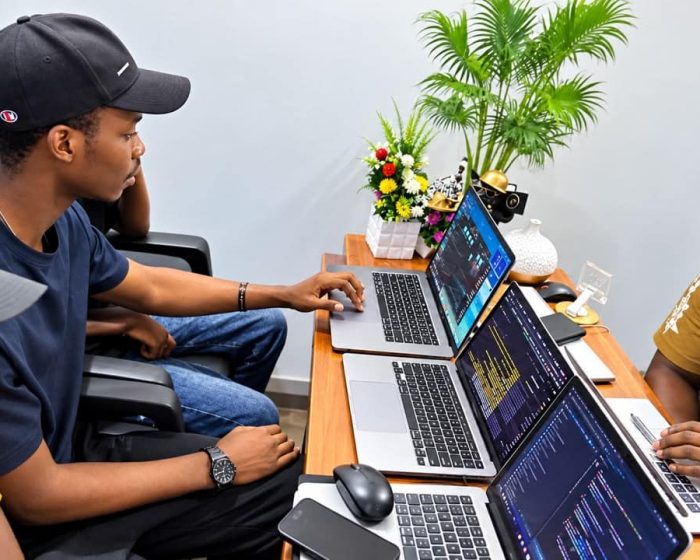
We combine technical expertise with a practical understanding of how Nigerian businesses operate, so your ERP system fits your processes instead of forcing you to change them. We also host and secure the systems we build, with backups and monitoring, through our cloud solutions service.
- Customised ERP development, built around your processes
- Cloud-based architecture you can reach from anywhere
- Secure, scalable systems that grow with your business
- Mobile access for managers and field teams
- Intelligent automation for approvals, alerts and reports
- Secure hosting, backups and role-based access managed by us
- Ongoing support and maintenance after launch
- Dedicated project management from start to finish
- Competitive implementation costs, quoted clearly up front
Our Process
How We Deliver Your ERP System
A clear, step-by-step process keeps your project on schedule and your team involved from day one.
01
Business Process Analysis
We study how your teams work today and agree exactly what the system must do for you.
02
Solution Design
We design the modules, workflows and data structure, and confirm the plan with you before development starts.
03
Custom Development
We build and configure your ERP, with connections to the tools and systems you already use.
04
Testing & Quality Assurance
Every workflow is tested with real scenarios before your team ever sees it.
05
User Training
We train your staff so they feel confident and productive from the first day.
06
Deployment & Support
We launch, move your existing data across, and provide ongoing support and maintenance.
Industries We Serve
ERP for Every Kind of Organisation
Our ERP solutions can be customised for organisations in many sectors, from a single-site business to a company with several branches, including:
- Manufacturing
- Logistics & Transportation
- Real Estate
- Healthcare
- Retail & Wholesale
- Education
- Government Agencies
- NGOs & Non-profits
- Construction
- Hospitality & Hotels
- Oil & Gas
- Professional Services
- Agriculture & Agribusiness
- Cooperatives & Microfinance
- Faith-based Organisations
Questions Answered
ERP Solutions: Frequently Asked Questions
What is an ERP solution and does my business need one?
An ERP (Enterprise Resource Planning) solution is a single system that connects your finance, inventory, sales, HR and reporting. If your team keeps re-entering the same data in spreadsheets, struggles to see accurate stock or sales figures, or waits for month-end to understand performance, an ERP system will probably save you time and money.
How much does an ERP system cost in Nigeria?
The cost depends on the number of modules, users and integrations you need. After we understand your processes, we give you a clear estimate before any work begins, so there are no surprises.
How long does it take to implement an ERP system?
A focused system for a small team can be ready much sooner than a multi-module platform for a large organisation. We agree a phased plan and timeline after the analysis stage, so the most important modules go live first.
Can you connect the ERP to the software we already use?
Yes. We can integrate your ERP with accounting tools, payment platforms, websites and other systems you rely on, and move your existing data across from spreadsheets or older software.
Is a cloud-based ERP system secure?
Yes, when it is built properly. We use role-based access so each person sees only what they should, secure connections, regular backups and ongoing updates to keep the system protected.
Will you train our staff and support us after launch?
Yes. Training is part of every project, and we provide ongoing support and maintenance after go-live, so your team is never left on its own.
Do you serve businesses outside Port Harcourt?
Yes. We are based in Port Harcourt and work with businesses and organisations across Nigeria, with remote delivery and on-site visits where needed.
What is the difference between ERP, CRM and accounting software?
Accounting software handles your books. A CRM manages customers, leads and sales follow-up. An ERP connects these and more, including inventory, purchasing, HR, payroll and projects, in one system with shared data. Many businesses start with the modules they need most and grow into a full ERP over time.
Should I choose a custom ERP or a ready-made one like Odoo?
Ready-made platforms are faster to start and suit standard processes. A custom ERP fits unusual workflows exactly and avoids paying for features you do not use. We review how you work, explain the trade-offs honestly and recommend the approach, or a mix of both, that gives you the best result for your budget.
Which ERP modules should we start with?
Start where the pain is greatest. For many businesses that is sales and invoicing, inventory, or accounting. We map your processes, agree a first phase that delivers value quickly, and add further modules such as HR, payroll, projects or manufacturing once the first ones are working well.
Can you move our data from Excel or our old system?
Yes. We clean and import your customers, suppliers, products, opening stock and balances from spreadsheets or older software, and check the figures with you before go-live, so you start with reliable data.
Will the ERP work with unstable internet or power?
We design for Nigerian conditions. Cloud systems need an internet connection, but they work on a phone or laptop with any reasonable connection, and data is saved safely on secure servers so a power cut at your office does not lose records. For sites with poor connectivity we can plan offline capture that syncs when the connection returns.
Let's Work Together
Ready to Bring Your Business onto One System?
Tell us how your business runs today, and we will show you what a well-built ERP solution could do for it.
Or call +234 705 9999833
